So, we know we have written about fertiliser recently and how important it is for a healthy lawn. But, is it safe for your pets?
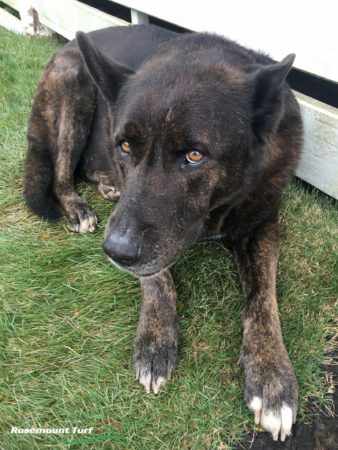
There are a range of steps you should take if you have pets and want to fertilise your lawn – we have listed the major ones below, however, speak to the team at Rosemount Turf if you’d like to know more.
Like with any turf product, always read the labels and follow any and all label instructions. If you are ever unsure on anything, please confirm with your supplier before applying your fertiliser.
In relation to both granular and liquid fertiliser, they should always be stored out of reach of any pets. Granular fertiliser can easily be mistaken for pet food, and liquids can be mistaken for water, so proper storage is super important.
Always keep all your pets indoors while you complete any lawn fertilising, and always read the label for advice as to how long your pets should remain off your lawn. Different types of fertiliser require different time limits.
Granular fertiliser is safe to use as long as the granules are watered correctly into the lawn/earth. Once this is done, they are very difficult for your pets to access, but it is always best to keep pets off your lawn for at least 24 hours after application.
The big problem with granular fertiliser is with chickens. Chickens can get to granules lower in the turf than other animals, which can cause issues. Either do not spread granular fertiliser where chickens roam or ensure the granules have dissolved before letting your chickens return, which usually takes a few days.
All in all, a majority of fertilisers are not that harmful to most pets – Lawn Solutions Australia recommend taking a look at Pet Health Network for further information.
In relation to liquid fertilisers, once they are dried on the leaf then you are fine to let your pets back out onto your lawn. This usually takes a few hours, depending on the weather.
If your pet loves to eat grass, keep them off the grass for as long as possible – or at least 48 hours. If you are using a liquid fertiliser and your pet does eat grass, always check with the manufacturer for what exactly is in the product, and you should always request a safety datasheet for that product.
If you believe your pet has, or may have, inhaled, ingested or come into contact with fertiliser seek veterinary advice immediately. Signs can include burnt paw pads, red and watering eyes, vomiting and lethargy, so if in doubt, always contact a vet.
If you follow the above advice, as well as speaking to your supplier or lawn professional, fertilising your turf can be safe for everyone including your pets!


We understand that COVID-19 (Coronavirus) is having a significant impact on all Australians and that it is a difficult and unprecedented time at the moment. We wanted to assure you that health and safety are the top priorities for Rosemount Turf management and staff. There are certain measures that we have put in place to ensure that our customers and employees are safe. We are being vigilant with our office and ensuring all surfaces are sterilised and cleaned regularly.
We would like to remind you that orders can be made online or over the phone and paid for via credit card, so no cash handling is needed. We can arrange delivery and the placement of your turf over the phone with our administration staff when you purchase. You don't need to be home when it is delivered.
If you have any further questions regarding any of our safety policies that we have in place during this time, or would like to discuss some new turf, give us a call on (07) 5448 6398.
Rosemount turf along with Lawn Solutions Australia is reaffirming our commitment to consumers with our ability to produce and deliver high quality turf products to consumers. No contact is required during the ordering or delivering process.