
$0.00
Cart
Secure checkout
0

Have you ever considered why we have to fertilise our lawns, when they produce their own food?
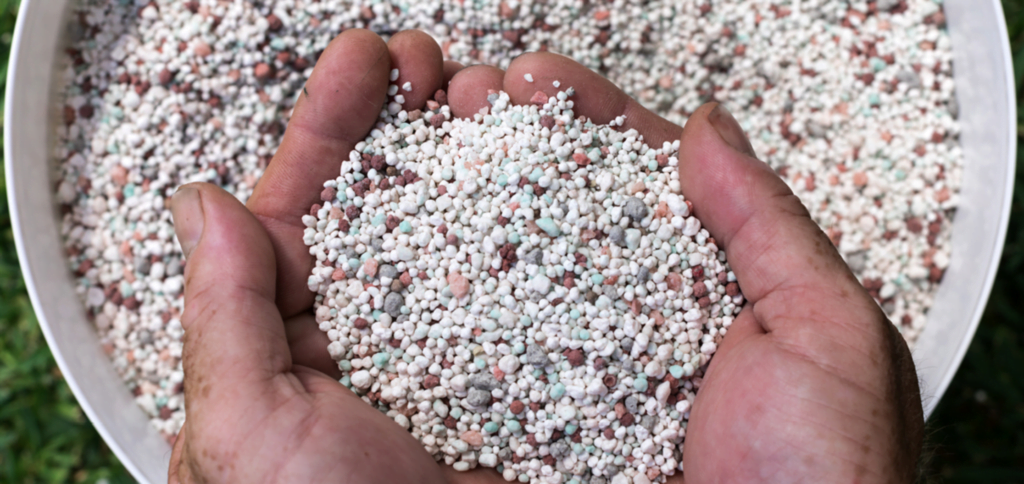
To keep your lawn looking fresh and healthy, fertilisation is an important part of your turf care routine. But we’ve taken a look as to why it needs it, when it creates food on its own. Read on to find out more and, if you’d like a little further information, give us a call on (07) 5448 6398.
The grass in your front and back yard produces its own food through photosynthesis. Photosynthesis is the process used by plants, algae and certain bacteria to harness energy from the sun and change it into chemical energy.
The process involves your turf receiving carbon dioxide, water, chlorophyll and energy from the sun, which results in it producing glucose and releasing oxygen into the atmosphere. The purpose of the carbohydrates that grass produces is to build and maintain its structural components and to provide the necessary energy for plant growth.
There is a common misconception that the food for your grass is the fertiliser itself – even the turf industry itself calls it ‘lawn food’ – but that isn’t the case… turf produces its own food. Here are a few reasons why fertiliser is still needed though.
One of the major issues our lawns face on a day-to-day basis is that there is generally a lack of nutrients contained within the soil. The reason for this is that the turf in your backyard was not created in the exact soil conditions it is currently being grown in, so supplementary nutrients may be needed. This means we can achieve a balanced level of nutrients and a great looking (and healthy) lawn!
Lawns cool down both themselves and their surroundings, which means your home will have less cooling needs. If your turf is looking a little under the weather, colourless and looks like it may need a little bit of nutrients, fertiliser can help promote growth and feed the roots of your lawn.
Spring is an awesome time to fertilise your turf, especially later in the season. Lawns must protect themselves during the warmest times of summer so, if you get that fertiliser onto your grass before the summer heat starts (when your turf is growing its fastest!), this helps prepare your lawn best.
When it comes down to it, it is all about balance. Some turf varieties require more (or less) fertiliser and/or nitrogen, so we always recommend speaking to an industry professional (such as Rosemount Turf) and they will be able to provide you guidance in relation to your specific turf type.
Give us a call on (07) 5448 6398 if you’d like some further help!

We understand that COVID-19 (Coronavirus) is having a significant impact on all Australians and that it is a difficult and unprecedented time at the moment. We wanted to assure you that health and safety are the top priorities for Rosemount Turf management and staff. There are certain measures that we have put in place to ensure that our customers and employees are safe. We are being vigilant with our office and ensuring all surfaces are sterilised and cleaned regularly.
We would like to remind you that orders can be made online or over the phone and paid for via credit card, so no cash handling is needed. We can arrange delivery and the placement of your turf over the phone with our administration staff when you purchase. You don't need to be home when it is delivered.
If you have any further questions regarding any of our safety policies that we have in place during this time, or would like to discuss some new turf, give us a call on (07) 5448 6398.
Rosemount turf along with Lawn Solutions Australia is reaffirming our commitment to consumers with our ability to produce and deliver high quality turf products to consumers. No contact is required during the ordering or delivering process.